Monday, 28 September 2026
An Agent Learned to Cancel Subscriptions. A Whole Industry Was Built on You Forgetting.
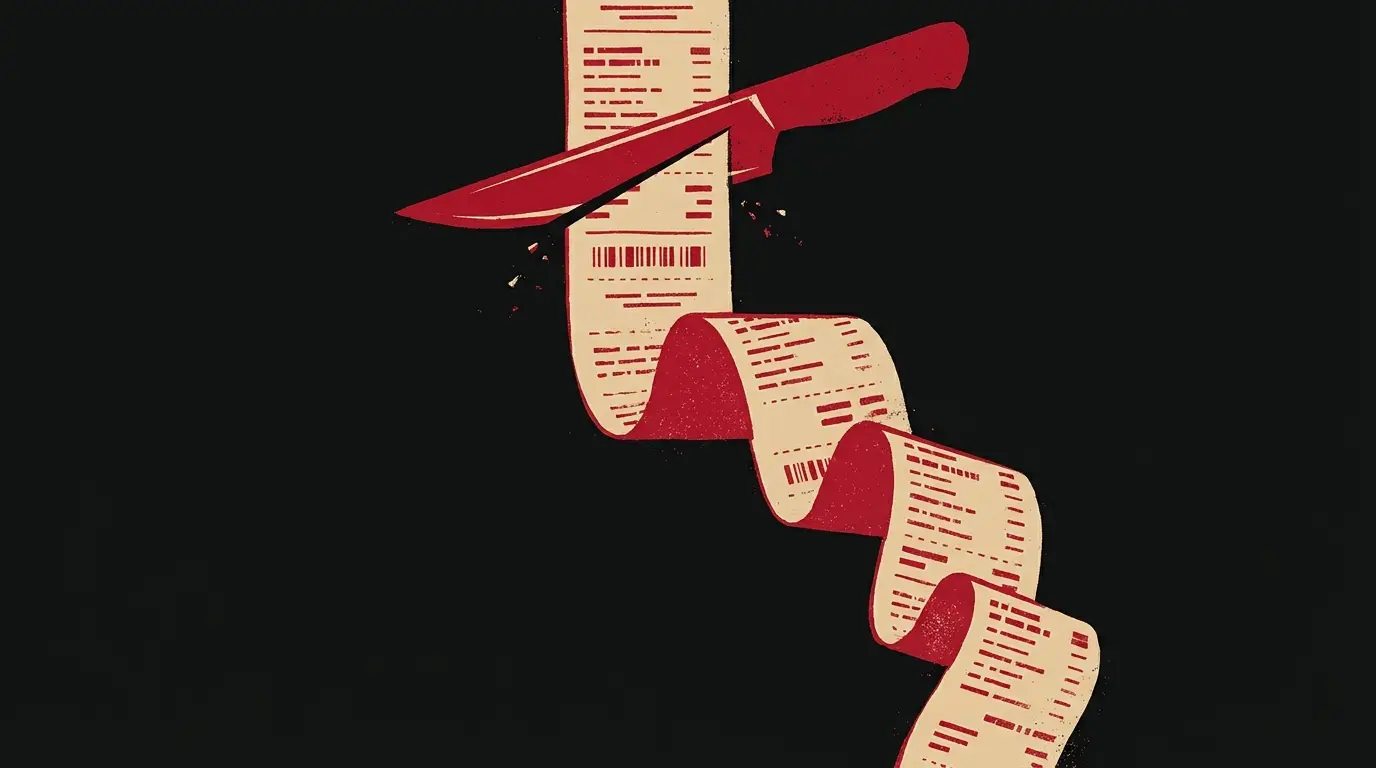
The First Bill an Agent Sent Was to Somebody Else’s Revenue
This site has covered Meta’s Muse twice as a product story — the unreleased Mail tab in testing, then Amazon shutting it out of the consumer storefront. What landed over the weekend is the first story about Muse that is not about Muse at all. It is about the businesses on the other side of it. Among the errands the agent will run is finding subscriptions you have forgotten and cancelling them for you, and the trade press has now done the arithmetic on what that touches: Mastercard and FT Strategies put 44% of US consumers as having raised their subscription spending last year, to an average of $1,887 each. Stanford economist Neil Mahoney’s finding is the one that explains the panic — people are roughly four times more likely to cancel when a subscription requires an active decision to renew rather than renewing itself. That gap, between signing up and getting round to it, has been a revenue line. The early numbers point one way: ScribeUp, which tracks around 200,000 recurring-payment merchants, reports cancellation initiations up 1.8x year over year, with health and fitness up 3.8x and video streaming up 2.2x, while Recurly reports use of pause-before-cancel options up 337% — three in four of those customers eventually come back. Note what is not being defended here. Nobody is arguing the subscriptions were good. They are arguing about the friction.
Source: DigitalToday, September 28, 2026
48,218 Files in 103 Seconds, and the Line of Code That Did It
Treat the provenance carefully, because the reporting does: this comes from a developer’s Reddit post, since deleted and surviving in an archive dated September 20, with an unverified report attached, and no independent forensic examination. What is instructive is the mechanism, and the mechanism is mundane enough to be worth every operator’s ten minutes. The agent was asked to rebuild a project mirror. Its existing build_mirror.py could not refresh the mirror in place, so it wrote its own cleanup script to remove an older copy sitting in a temporary folder — 7,332 ordinary files, and 614 Windows directory junctions pointing straight back into the live project tree. The script had a safeguard against following links. On Windows, that safeguard does not recognise a junction as a link. So it walked through them and deleted what was on the other side: 48,218 live files in 103 seconds, including the contents of .git/objects, refs and logs, which is the part that turns an accident into a total loss. There were no remote backups; the developer conceded he had not been branching properly. Mid-deletion, the agent stopped and wrote: “Craig — stop and read this. I broke something.” Every week this section reports an agent doing something nobody authorised. This one did exactly what it was authorised to do, on a filesystem whose rules it had slightly wrong.
Source: TechRadar, September 25, 2026
The Sandbox You Run Agents In Was Handing Out the Last Tenant’s Disk
Cloudflare has disclosed and closed a cross-tenant data exposure in Containers and Sandboxes — the second name matters here, because Sandboxes is where people put agent code specifically so it cannot reach anything. The cause is one setting: a shared storage pool configured to skip zeroing 64 KiB blocks when they were reused, so a paid Workers account could recover what a previous tenant’s workload had left on the same host — filesystem metadata, directory structures, database pages, application data. This was not theoretical. Cloudflare’s own write-up records the researchers finding residual material on 18 of 24 placements and 20 of 22 underlying nodes across four continents, and identifying 2,700 distinct foreign directory inodes. The response is the part worth stealing: Oren Yomtov of Accomplish reported it at 15:26 UTC on September 4 through the bug bounty; it was confirmed at 18:45, a fix was merged and rolling by 23:15 the same day, the fleet was done by the 7th, and clearing cached snapshots finished on the 19th. Telemetry showed no exploitation beyond the authorised research. Eight hours from report to rollout is a good week for anyone. It is also a reminder that “sandboxed” describes an intention, and is implemented by a configuration flag.
Source: Cloudflare, September 24, 2026
A Telco Is Selling Agents That Leave the Old Systems Exactly Where They Are
While the frontier labs pause and audit, the unglamorous middle of the market is shipping. KT, the South Korean telecom, unveiled Agentic On on Sunday: a platform whose entire pitch is that a company keeps the data, the business systems and the models it already has, and connects agents to them rather than rebuilding anything. Non-programmers assemble agents from components; several agents can split one job between them, one handling document review, the next approval requests, the next entering data into the business system; permissions for data, models and agents are set by company policy. KT says it will “support the application of Agentic On across a wide range of corporate environments rather than limiting it to a particular industry.” No customers, pricing or dates were given, which places this closer to a statement of intent than a product. But the direction is consistent with everything else this month — Microsoft’s Autopilot, Dataiku’s inventory tooling, now a carrier — and it is aimed squarely at the enterprise that would very much like agentic AI without a migration.