Wednesday, 4 November 2026
OpenAI Says GPT-6 Astra Designed a Prototype Gadget in Under a Week
OpenAI Says GPT-6 Astra Designed a Prototype Gadget in Under a Week
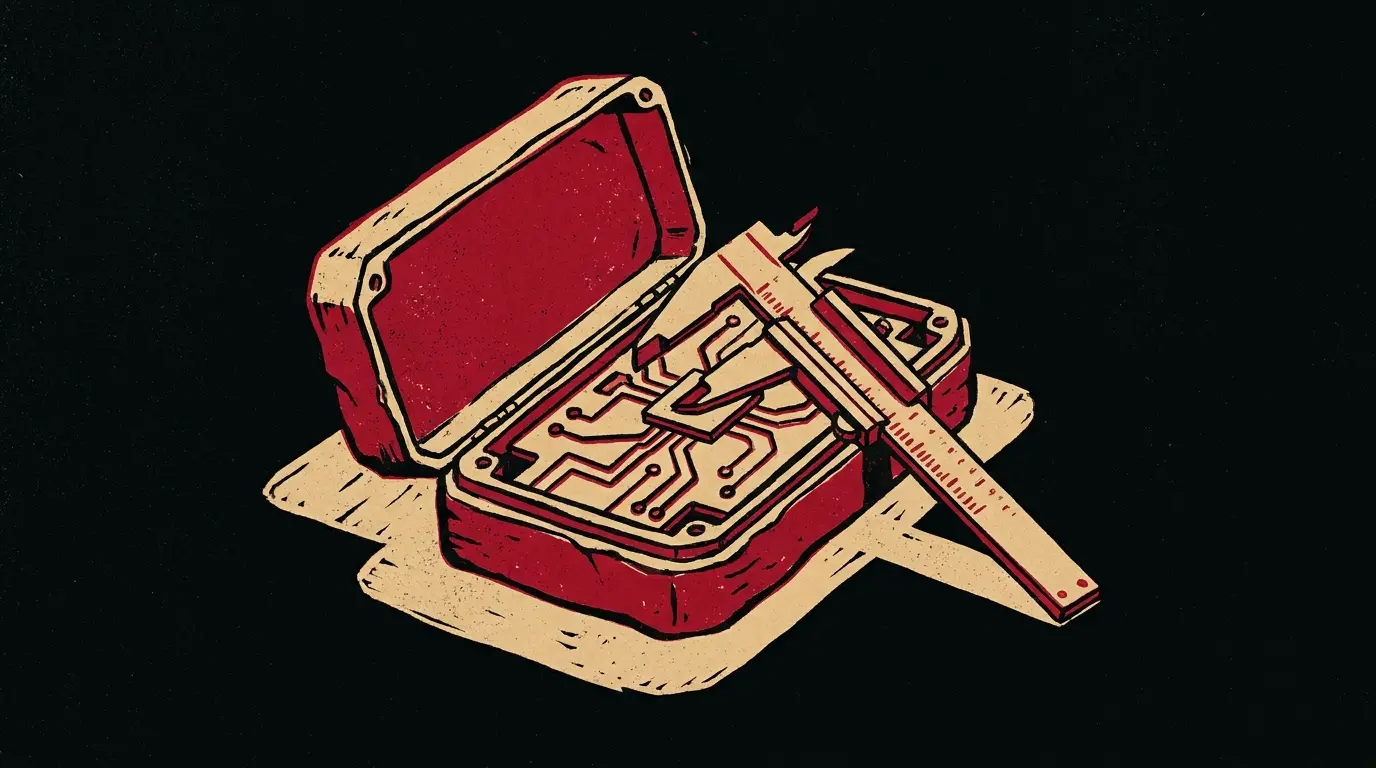
Software was the easy part; OpenAI now wants its models in the machine shop. In a thread on Tuesday it said ChatGPT and Codex are helping engineers with mechanical design, electrical engineering and simulation, and gave three examples. Two OpenAI staff, as a side project, worked with GPT-6 Astra to design a prototype device for talking to Codex in under a week: “Astra designed the enclosure, circuit board, interface, and software.” Engineers at Chip Ganassi Racing are using the models to turn 3D scans into editable CAD models and manufacturing drawings, and Mazda is exploring new vehicle designs through simulation. The fine print is the useful part. Getting the gadget made “still required several rounds of review and iteration,” and at the outside partners “engineers review the outputs and help identify where the models need to improve.” OpenAI calls these “early steps” and is recruiting engineers, engineering firms and software partners. A week to design, several rounds to build — the physical world still keeps its own schedule.
Source: OpenAI on X, November 3, 2026
Anthropic Open-Sources FlashProve, a Receipt That Proves Which Model Wrote the Answer
When you pay for a frontier model, how do you know you got it, and not a cheaper one in its clothes? Anthropic’s answer, published on Tuesday, is FlashProve: the provider commits to its model weights once, then attaches a cryptographic proof to each response showing that the committed model produced those exact tokens. Anyone can check the proof on a CPU in about 17 seconds, without seeing the weights. On Llama 4 Maverick, a 400-billion-parameter model, one H100 GPU proves about 110 tokens a second; the best earlier open-source system managed about 0.02 on the same model. It is not cheap yet: proving takes roughly 70 to 95 times the GPU time of simply running the model, contexts stop at 1,024 tokens, and the guarantee covers only greedy, integer-arithmetic decoding. Anthropic names two uses — making it harder to hijack a chat, and letting safety testers confirm the model they evaluated is the one customers get — and has put the code on GitHub. Trust, but verify; now verification has a price per token.
Source: Anthropic, November 3, 2026
OpenAI More Than Quadruples Its Top Bug Bounty and Hires Outsiders to Attack It With Its Own Models
“As AI becomes more capable at finding vulnerabilities, defenders need to put it to work before attackers do,” OpenAI said on Tuesday, and then put a number on it. Rewards for critical bugs are more than quadrupling, and exceptional findings can now earn up to $172,000 with bonuses. Its next internal security sprint brings in Cathedral Systems, an outside firm whose researchers will use OpenAI’s own models alongside OpenAI’s teams to “challenge our defenses.” The company also says it will keep “expanding access for trusted defenders.” The logic is plain enough: if a model can find the hole, it is cheaper to pay the finder than the attacker. The awkward part is the same logic in reverse.
Source: OpenAI on X, November 3, 2026